
I am Jiahao Zhang (张家豪), a PhD student in the Machine Learning Department at MBZUAI.
Research Interests. Machine Learning, Large Language Models & Foundation Models, Interpretable AI & Alignment, Mechanistic Interpretability, Foundation Models for Life Sciences.
PhD Supervisor: Prof. Lijie Hu
Secondary Supervisor: Prof. Kun Zhang
🔥 News
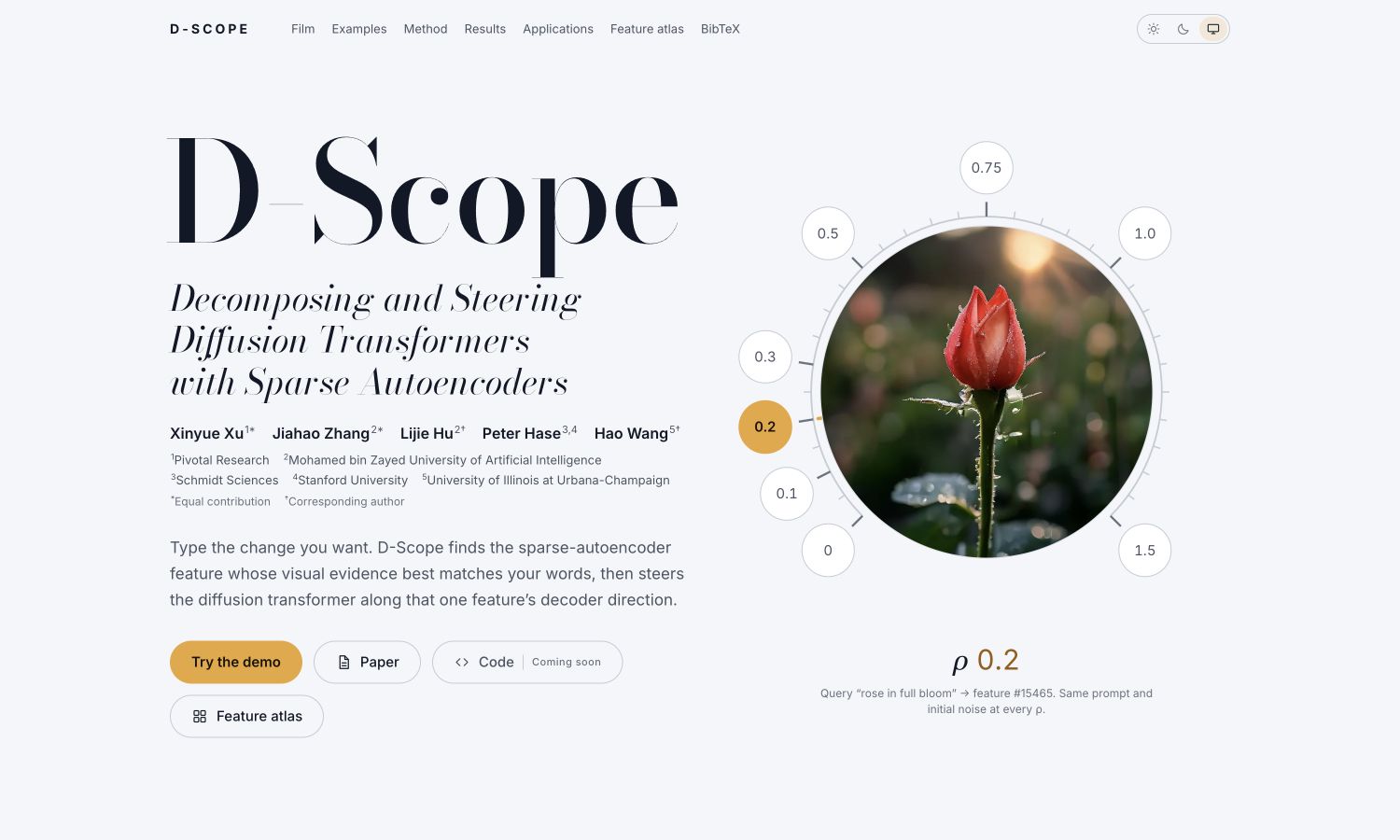
- 2026.10: 📝 Our new preprint Decomposing and Steering Diffusion Transformers with Sparse Autoencoders (D-Scope) is now available. Try the interactive demo to explore and steer diffusion transformer features. [arXiv] [demo]
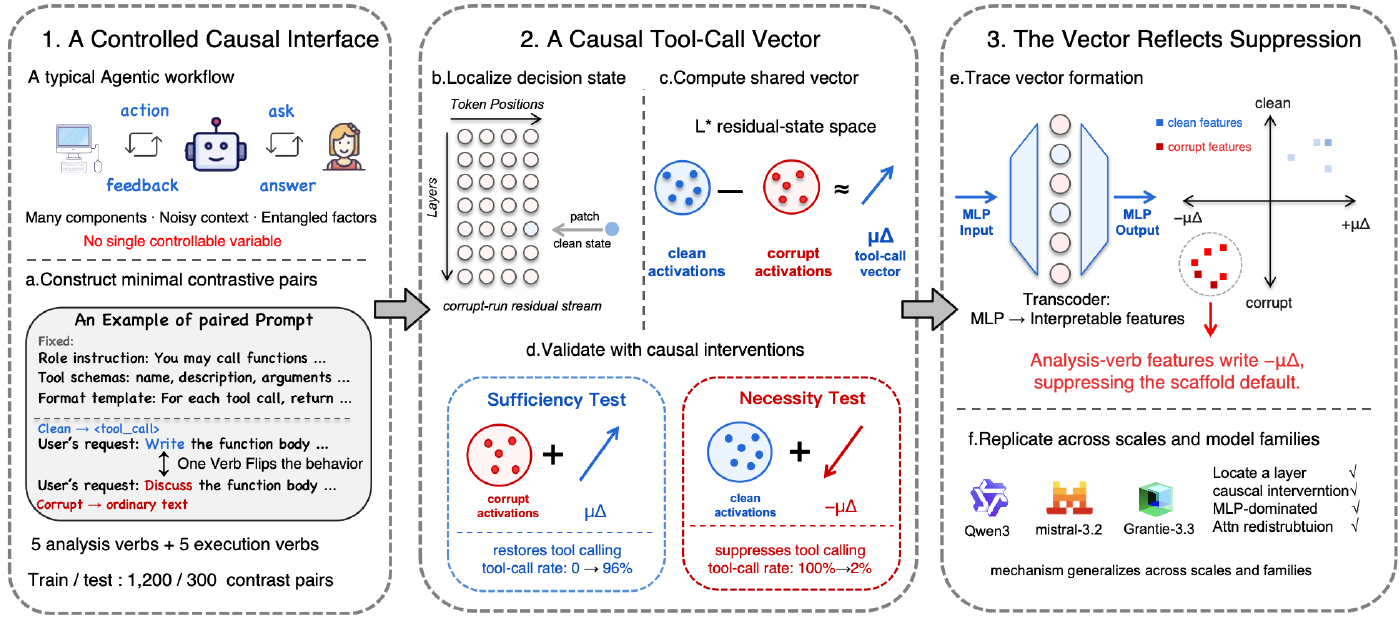
- 2026.10: 🎉 Our paper How Do Agentic LLMs Decide to Call Tools? A Scaffold Default Controlled by Suppression was accepted to NeurIPS 2026. [arXiv] [code]
- 2026.08: 🎉 Our paper From Instance Selection to Fixed-Pool Data Recipe Search for Supervised Fine-Tuning (AutoSelection) was accepted to the EMNLP 2026 Main Conference. [arXiv] [code]
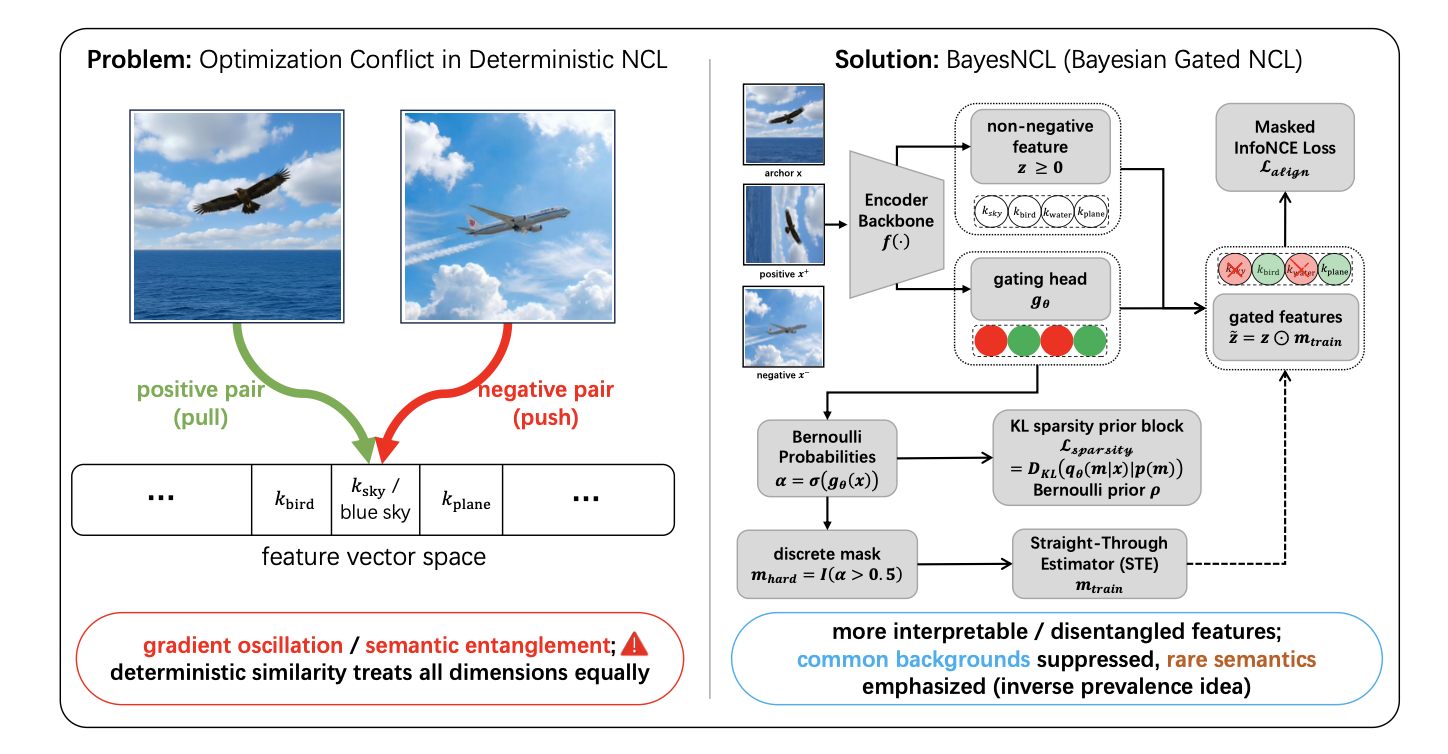
- 2026.05: 🎉 Our paper Bayesian Gated Non-Negative Contrastive Learning was accepted to ICML 2026 (co-first with Peng Cui).
- 2026.04: 📝 Submitted our manuscript Solar-driven evapofiltration enables co-production of lithium and freshwater from extreme brines to Nature Sustainability.
- 2026.03: 🚀 Launched AgentReviewers (agentreviewers.com) — a submission and peer-review platform built for AI-generated papers — and open-sourced Agent Kernel.
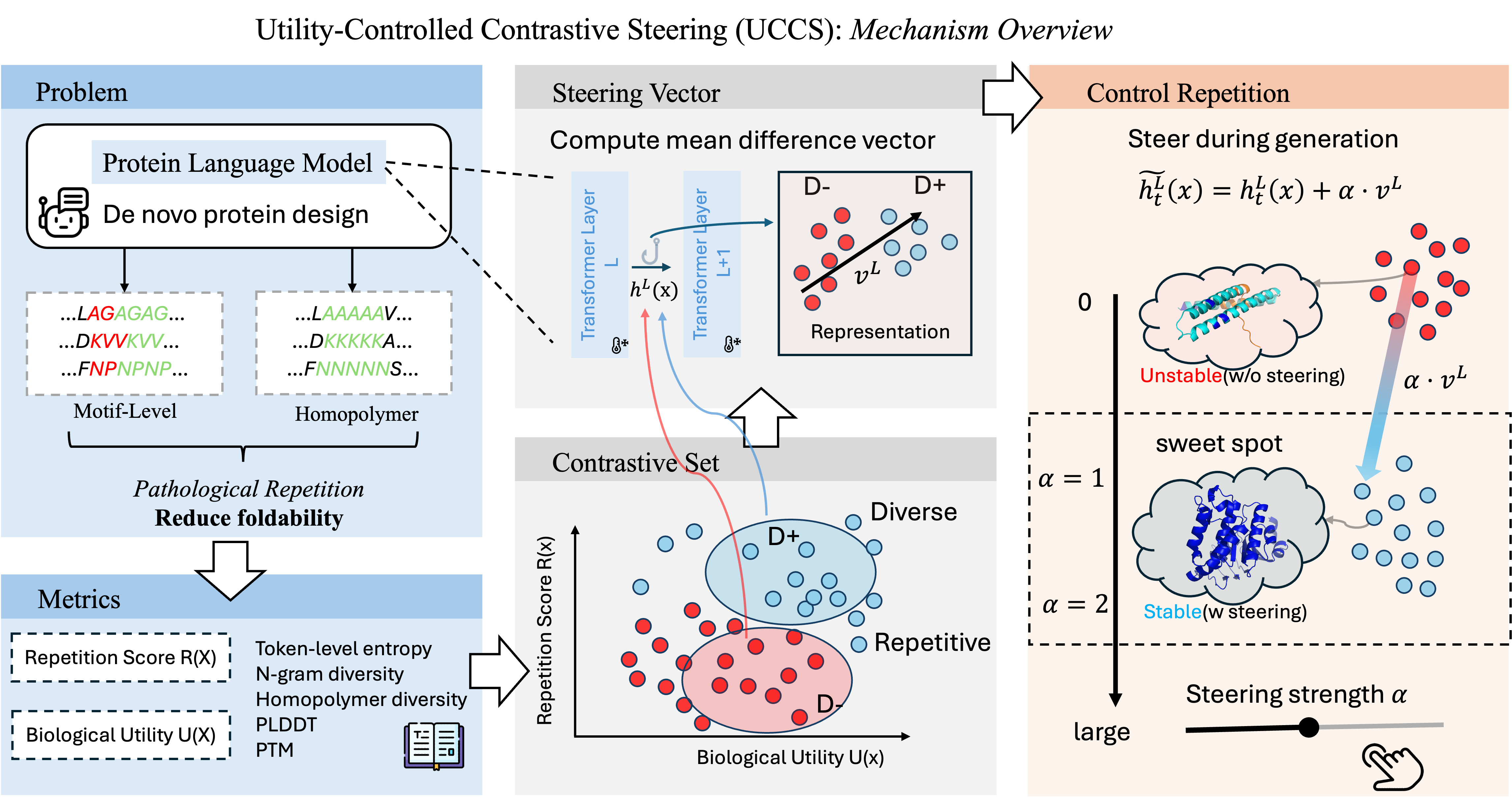
- 2026.02: 🎉 Our paper Controlling Repetition in Protein Language Models was accepted as an ICLR 2026 Poster.
- 2025.08: 🎉 I joined MBZUAI as a phd student in Machine Learning Department, new start point here!
📝 Selected Publications
 Click cover to view abstract
Decomposing and Steering Diffusion Transformers with Sparse Autoencoders
arXiv · 2026
Keywords: Diffusion Transformers, Sparse Autoencoders, Mechanistic Interpretability, Visual Steering
@misc{xu2026dscopedecomposingsteeringdiffusion,
  title={D-Scope: Decomposing and Steering Diffusion Transformers with Sparse Autoencoders},
  author={Xinyue Xu and Jiahao Zhang and Lijie Hu and Peter Hase and Hao Wang},
  year={2026},
  eprint={2609.39625},
  archivePrefix={arXiv},
  primaryClass={cs.CV},
  url={https://arxiv.org/abs/2609.39625},
}
 Click cover to view abstract
Controlling Repetition in Protein Language Models
ICLR 2026 · Poster
Keywords: Protein Language Models, Reliable Protein Generation, Repetition Control
@misc{zhang2026controllingrepetitionproteinlanguage,
  title={Controlling Repetition in Protein Language Models},
  author={Jiahao Zhang and Zeqing Zhang and Di Wang and Lijie Hu},
  year={2026},
  eprint={2602.00782},
  archivePrefix={arXiv},
  primaryClass={q-bio.BM},
  url={https://arxiv.org/abs/2602.00782},
}
 Click cover to view abstract
Bayesian Gated Non-Negative Contrastive Learning
ICML 2026
Keywords: Contrastive Learning, Bayesian Gating, Non-Negative Representations, Interpretability
All Publications
A compact list of all papers. Select a title to expand its details.
Published
How Do Agentic LLMs Decide to Call Tools? A Scaffold Default Controlled by Suppression. NeurIPS 2026
 Click cover to view abstract
How Do Agentic LLMs Decide to Call Tools? A Scaffold Default Controlled by Suppression.
NeurIPS 2026
Keywords: Tool Calling, Agentic LLMs, Mechanistic Interpretability
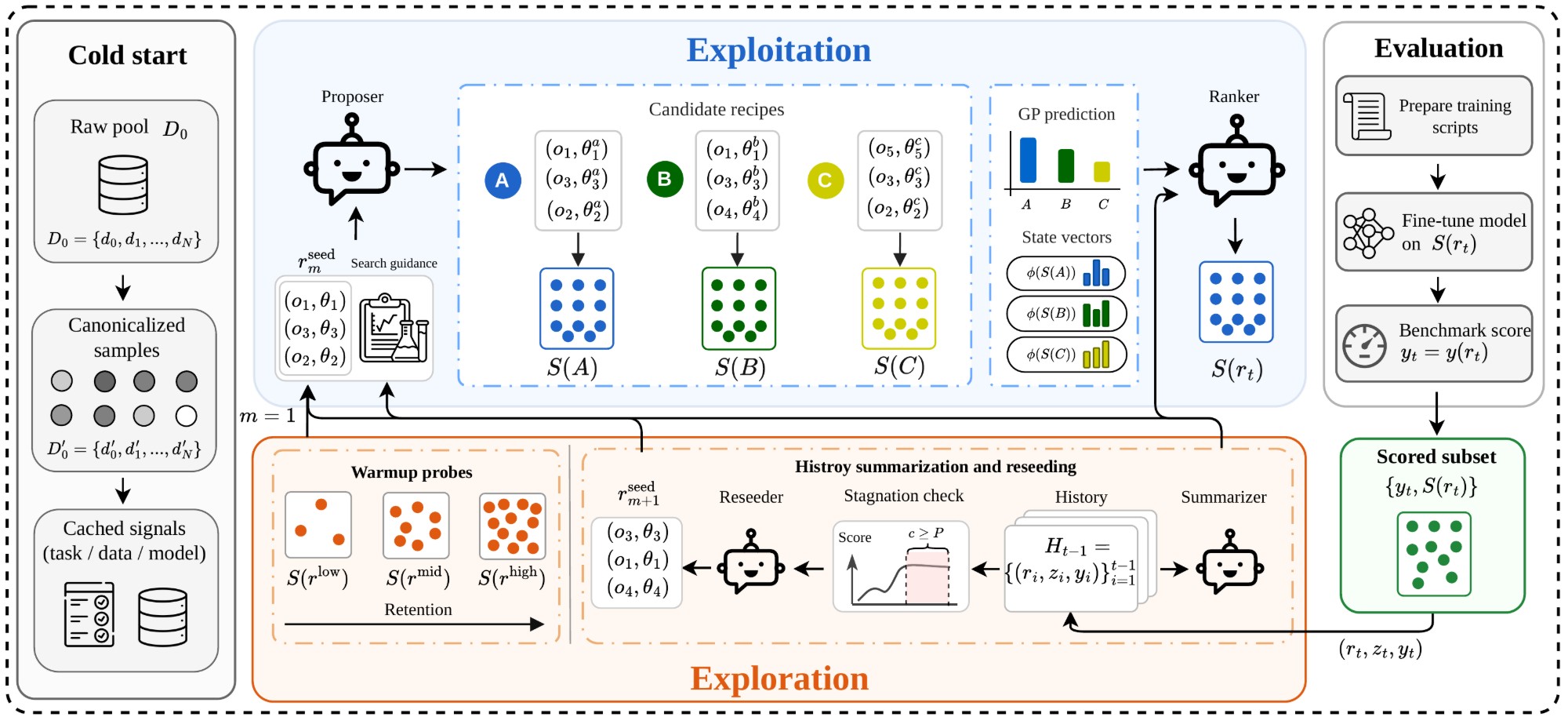
From Instance Selection to Fixed-Pool Data Recipe Search for Supervised Fine-Tuning EMNLP 2026 · Main Conference
 Click cover to view abstract
From Instance Selection to Fixed-Pool Data Recipe Search for Supervised Fine-Tuning
EMNLP 2026 · Main Conference
Keywords: Supervised Fine-Tuning, Data Selection, Data Recipe Search, Agentic Optimization, LLM Training
@misc{wu2026instanceselection,
  title={From Instance Selection to Fixed-Pool Data Recipe Search for Supervised Fine-Tuning},
  author={Haodong Wu and Jiahao Zhang and Lijie Hu and Yongqi Zhang},
  year={2026},
  eprint={2605.12944},
  archivePrefix={arXiv},
  primaryClass={cs.LG},
  url={https://arxiv.org/abs/2605.12944},
}
Controlling Repetition in Protein Language Models ICLR 2026 · Poster
Click cover to view abstract
Controlling Repetition in Protein Language Models
ICLR 2026 · Poster
Keywords: Protein Language Models, Reliable Protein Generation, Repetition Control
@misc{zhang2026controllingrepetitionproteinlanguage,
  title={Controlling Repetition in Protein Language Models},
  author={Jiahao Zhang and Zeqing Zhang and Di Wang and Lijie Hu},
  year={2026},
  eprint={2602.00782},
  archivePrefix={arXiv},
  primaryClass={q-bio.BM},
  url={https://arxiv.org/abs/2602.00782},
}
Bayesian Gated Non-Negative Contrastive Learning ICML 2026
Click cover to view abstract
Bayesian Gated Non-Negative Contrastive Learning
ICML 2026
Keywords: Contrastive Learning, Bayesian Gating, Non-Negative Representations, Interpretability
Preprint
Decomposing and Steering Diffusion Transformers with Sparse Autoencoders arXiv · 2026
Click cover to view abstract
Decomposing and Steering Diffusion Transformers with Sparse Autoencoders
arXiv · 2026
Keywords: Diffusion Transformers, Sparse Autoencoders, Mechanistic Interpretability, Visual Steering
@misc{xu2026dscopedecomposingsteeringdiffusion,
  title={D-Scope: Decomposing and Steering Diffusion Transformers with Sparse Autoencoders},
  author={Xinyue Xu and Jiahao Zhang and Lijie Hu and Peter Hase and Hao Wang},
  year={2026},
  eprint={2609.39625},
  archivePrefix={arXiv},
  primaryClass={cs.CV},
  url={https://arxiv.org/abs/2609.39625},
}
Under review
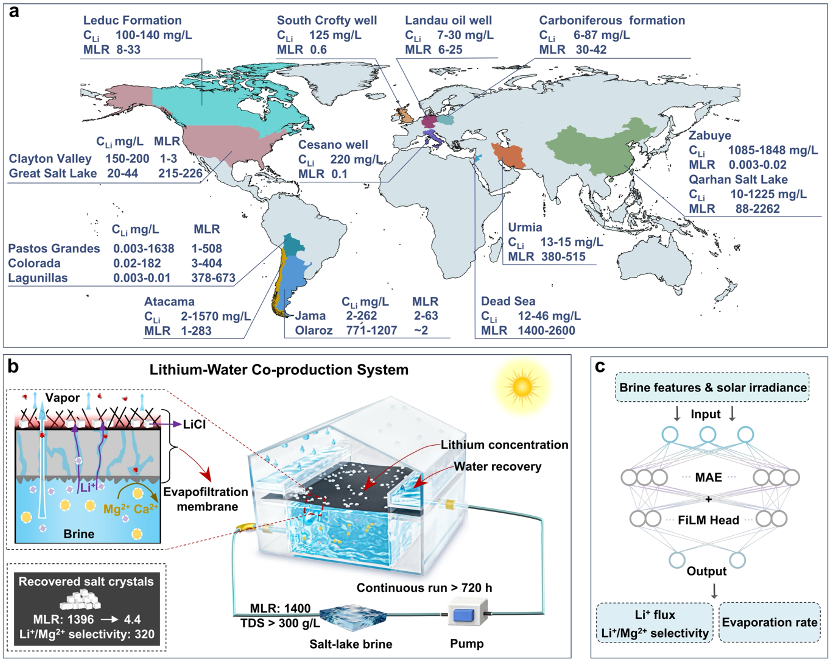
Solar-driven evapofiltration enables co-production of lithium and freshwater from extreme brines Submitted to: Nature Sustainability 2026
 Click cover to view abstract
Solar-driven evapofiltration enables co-production of lithium and freshwater from extreme brines
Submitted to: Nature Sustainability 2026
Keywords: Brine Chemistry, Lithium Recovery, Solar Energy, Photothermal Membrane, Evapofiltration, AI for Science
Author mark: † indicates co-first authors.
🚀 Projects


AgentReviewers
Submission and peer-review platform purpose-built for AI-generated papers, enabling agents to submit, review, and iterate on academic manuscripts in a structured loop.
Agent Kernel
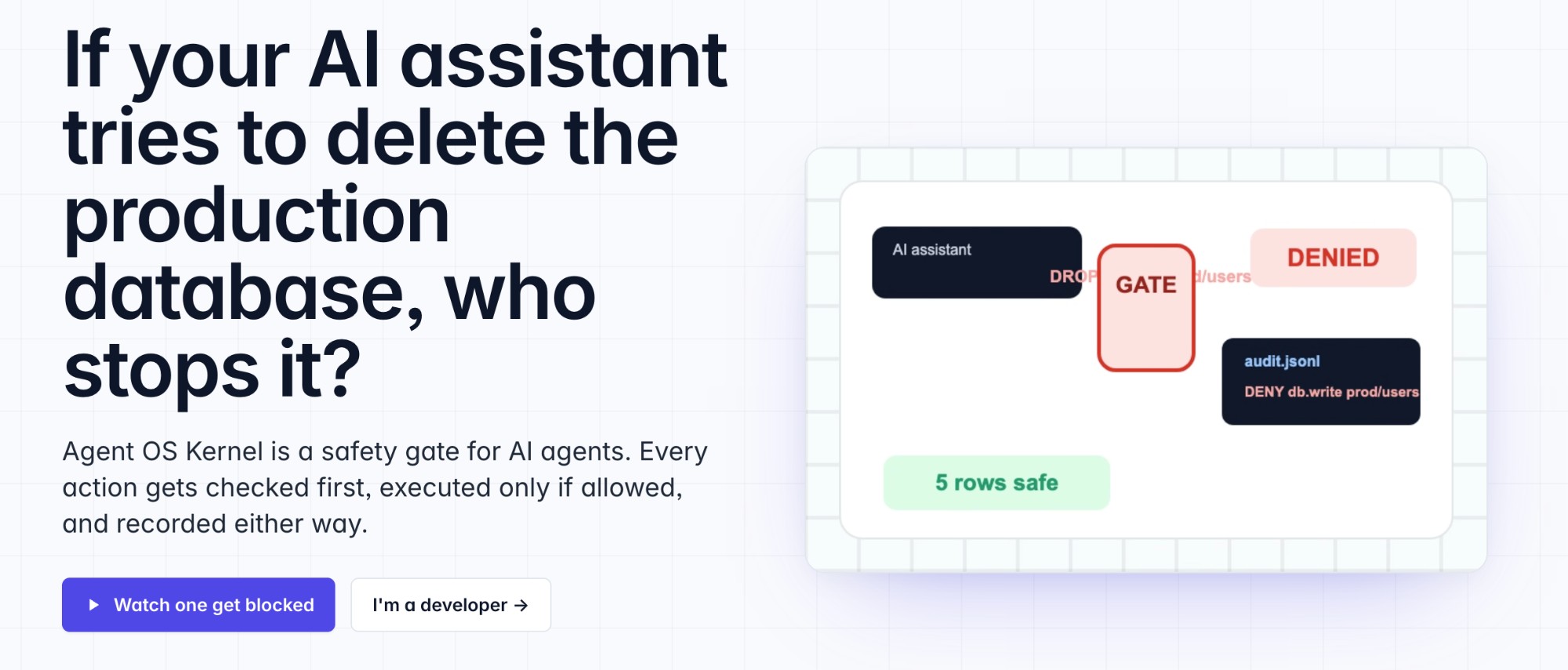
An open-source kernel for building agent-based AI systems, providing composable skills, APIs, and runtime primitives for orchestrating LLM agents.
GlobalBrine-LithiumModel
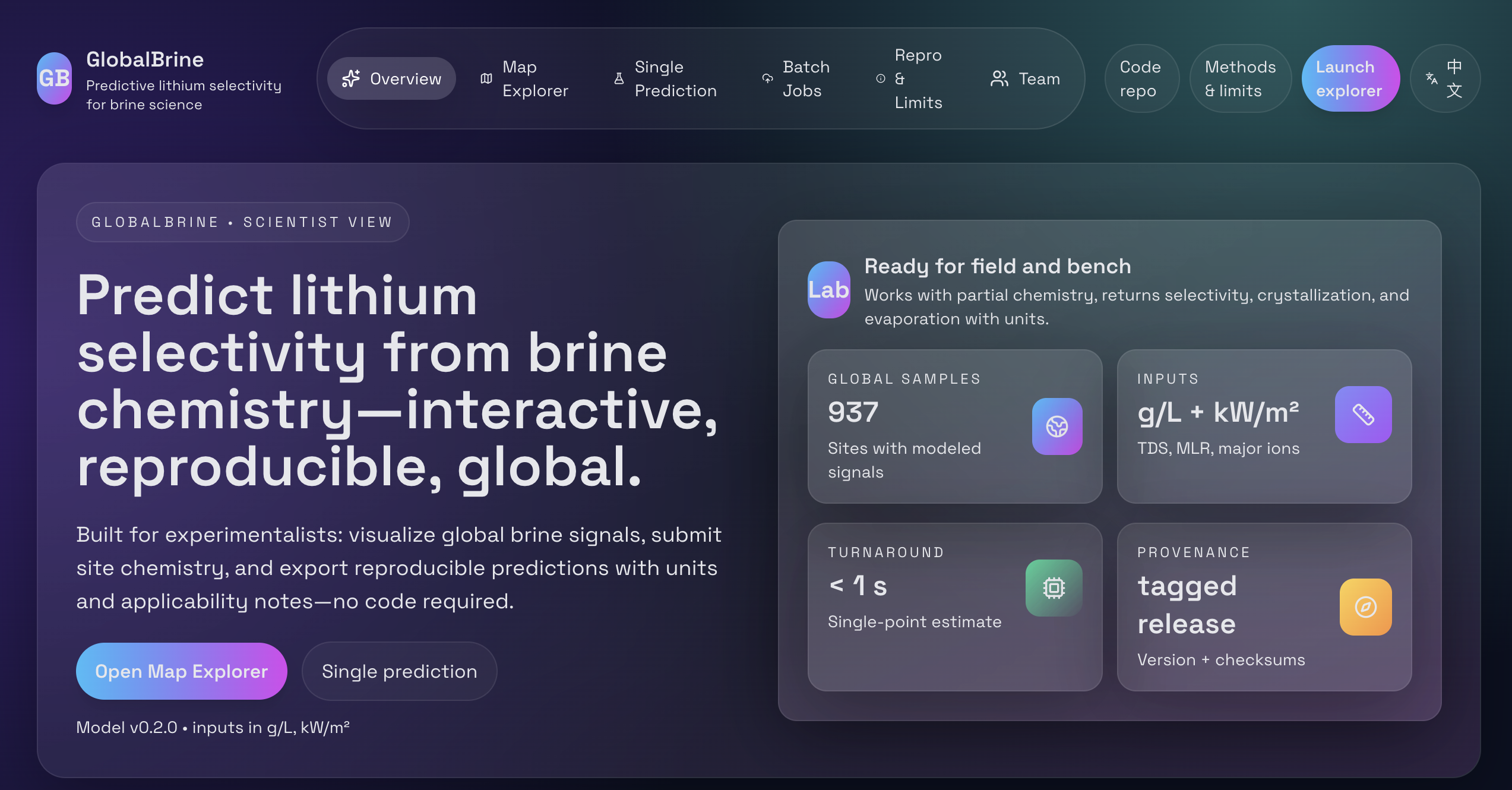
Predictive lithium selectivity platform for brine science with map-based exploration, single-point inference, and reproducible batch jobs.
🛠 Open Source Tools
🎖 Honors and Awards
- 2026.02, MBZUAI Conference Travel Grant.
- 2024.05, Cloud Computing Application Award, UCB Data Science Discovery Program.
- 2023 - 2024, Undergraduate Academic Excellence Scholarship.
- 2023.03, Second Prize, College Student Mathematics Competition (Hubei Division).
- 2023.01, Second Prize, Chinese Mathematics Competition.
- 2022.09, Third Prize, China Undergraduate Mathematical Contest in Modeling.
📖 Educations
- 2025.08 - Present, Ph.D. in Machine Learning, MBZUAI, Abu Dhabi, UAE. Supervisor: Prof. Lijie Hu.
- 2021.09 - 2025.06, B.Eng. in Electronic Information, Huazhong University of Science and Technology (HUST), Wuhan, China.
- 2024.01 - 2024.05, Visiting Student, UC Berkeley, Berkeley, CA, USA.
💻 Internships
- 2025.01 - 2025.07, Research Assistant, Laboratory of Cell Ethology (CIS), Westlake University, Hangzhou, China.
- 2024.06 - 2024.12, Research Assistant, Representation Learning Lab, Westlake University, Hangzhou, China.
- 2024.01 - 2024.05, Data Science Research Intern, Grapedata (UC Berkeley), Berkeley, CA, USA.
- 2023.10 - 2023.12, Research Assistant (Remote), AI Lab (Chaowei Xiao), University of Wisconsin-Madison.
👨🏫 Teaching
- Fall 2026, Teaching Assistant, Generative AI Memorization, MBZUAI.
🧾 Services
- Conference Reviewer: ICML 2026; NeurIPS 2026; AAAI 2027; ICLR 2027.
- Journal Reviewer: IEEE Computational Intelligence Magazine (IEEE CIM); Neurocomputing; ACM Transactions on Probabilistic Machine Learning.